Finding it hard to unplug while trying to grow your brand online? Implementing effective digital marketing tips for small business success shouldn’t mean sacrificing your mental health. Running a company requires wearing many hats, but constant hustling leads directly to burnout.
Here are ten essential rules to help you manage your online presence, use smarter marketing strategies, and maintain a healthier work-life balance.

1. Step away from the email and notifications
Earlier this year, a report circulated that a French law banned employees from checking work emails after 6pm. It wasn’t true but fitted with our notion of the French as a nation of slackers favouring long lunches, five-day weekends and plenty of slap and tickle while les rosbifs carried on working through the night. But maybe there should be a law against after-hours fielding of bosses’ or clients’ emails?
“It would be impossible to enforce,” says Leeds-based life coach Melanie Allen. “But companies should think about productivity. Is this incessant checking of emails and social media by their employees adding to productivity or just pointless stress?” When executing digital marketing tips for small business growth, constant notification checking mimics fake productivity while driving up stress levels.
2. Just say no to constant digital demands
If you’re available 24/7 to your clients’—with all due respect—increasingly loopy and unremitting demands, and you’re the kind of person who as a result gets overloaded, try harnessing the power of no. This is especially true when managing social media channels or tight campaign deadlines.
Allen advises: “If you tend to say yes without thinking when you’re asked to do something extra, stall. Don’t answer straight away. Say you’ll get back to the person asking, then use that time to think clearly about whether to say yes or no.”

If you want to say yes, fine. But if you want to say no, say no and keep saying it. Don’t justify your actions or give excuses. There’s no need to be nasty or rude. The Mental Health Foundation recommends that when work demands are too high, you must speak up.
3. Work smarter, not harder on your campaigns
There is a body of opinion that you should work more and sleep less. It often takes Margaret Thatcher as a role model: she only needed four hours sleep and look what she did to the country! These days they call it sleep hacking—training your mind and body to need less sleep. But that trend is all wrong, argues US academic Matt Might in his work-life balance blog.
Think of it this way, he suggests: “The equation for work is: output = unit of work / hour × hours worked. ‘Work more, sleep less’ people tend to focus too much on the hours worked part of the equation. The unit of work / hour part of the equation—productivity—is just as (if not more) important.”
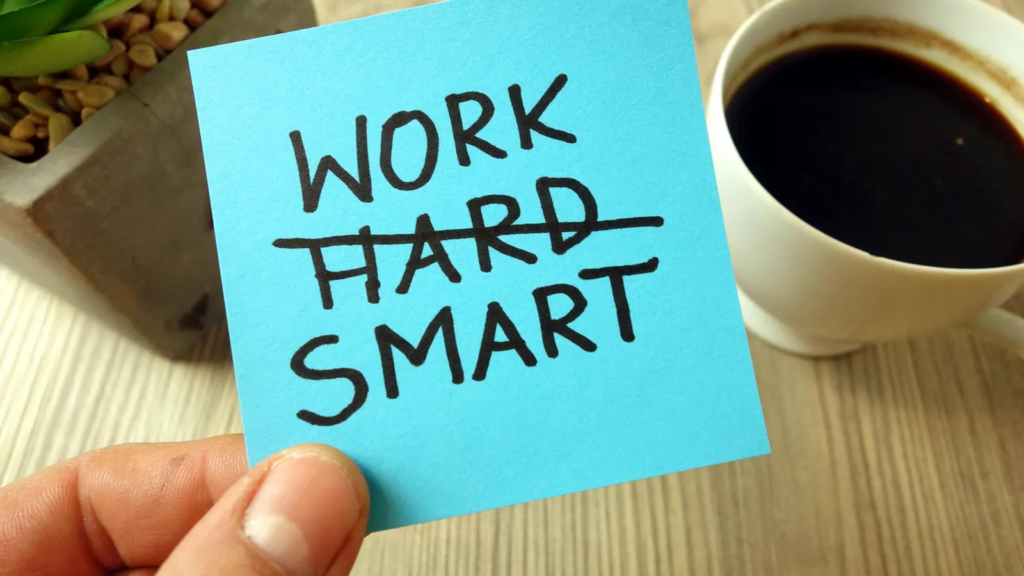
In its advice on work-life balance, the Mental Health Foundation counsels: “Work smart, not long.” What does that mean in practice for an entrepreneur? It means choosing the right channels instead of trying to be on every platform. Content scheduling tools are great digital marketing tips for small business operations because they let you automate your workflow. Tight prioritization—allowing yourself a certain amount of time per task—keeps you from getting caught up in less productive activities, such as unstructured meetings or endlessly scrolling your competitors’ feeds.
Clearly, many of us are not working smart, but stupid. British productivity remains low while the number of hours we work exceeds that of some of our European neighbours. One result of this is the dismal array of statistics set out by the Mental Health Foundation: when working long hours 27% of employees feel depressed, 34% feel anxious and 58% feel irritable.
4. Leave work at work (and close the laptop)
Imagine you’re just about to leave your workplace, possibly for cocktails at TGI Fridays, even though it’s actually Tuesday. Before you do, write a note to yourself listing outstanding marketing tasks, content ideas, or any work things that are on your mind.
“Then shut the diary, turn off your PC, store your message and leave it,” counsels Allen. “Focus on the image of shutting the diary, saving the message or turning off your PC.” If this is not possible, she recommends what she calls a stop-breathe technique.
Take a slow breath and acknowledge that you’ve left. If you can’t do that at the office door, when you’re getting a train or bus and the door closes, imagine that’s the end of your working day. Closure is a big theme among those offering tips to a healthy work-life balance: the Mental Health Foundation says that if you do happen to take work home with you, you should try to confine it to a certain area of your home—and be able to close the door on it.
5. Forget about perfection in your content
The injunction to put work away for the day sounds fine, but hold on. It’s surely not as simple as that. As you log off, you realize your latest social media graphic or ad copy haven’t been done as well as they could be. You turn on your heel and go back to tweak it. Is that so very wrong?
“Well,” says Allen, “some people find it very hard to let things go. I call it ‘good enough versus fabulous’. Sometimes, if you’re overworked, you need to explicitly tell yourself that what you’ve done may not be perfect, but it is good enough.”
The best digital marketing tips for small business focus on consistency over absolute perfection. Sometimes a raw, authentic video performs better than a heavily over-edited production. Don’t put extra pressure on yourself when you don’t need to—at work or at home. Give yourself a break. It doesn’t matter if your business graphics aren’t immaculate or your social feeds aren’t flawlessly curated every single day.
6. Don’t be a marketing martyr
“There is also the tendency I come across where somebody will say, ‘I have to do everything round here,’” says Allen. “To feel like a martyr gives some people a great deal of pleasure—they feel they’re powerful and busy.”
But think about how infuriating and exhausting that is to sustain. If you are handling search engine optimization, content creation, customer service, and email campaigns completely alone, you will crash. Leverage automation or delegate tasks when possible rather than trying to wear the martyr badge.
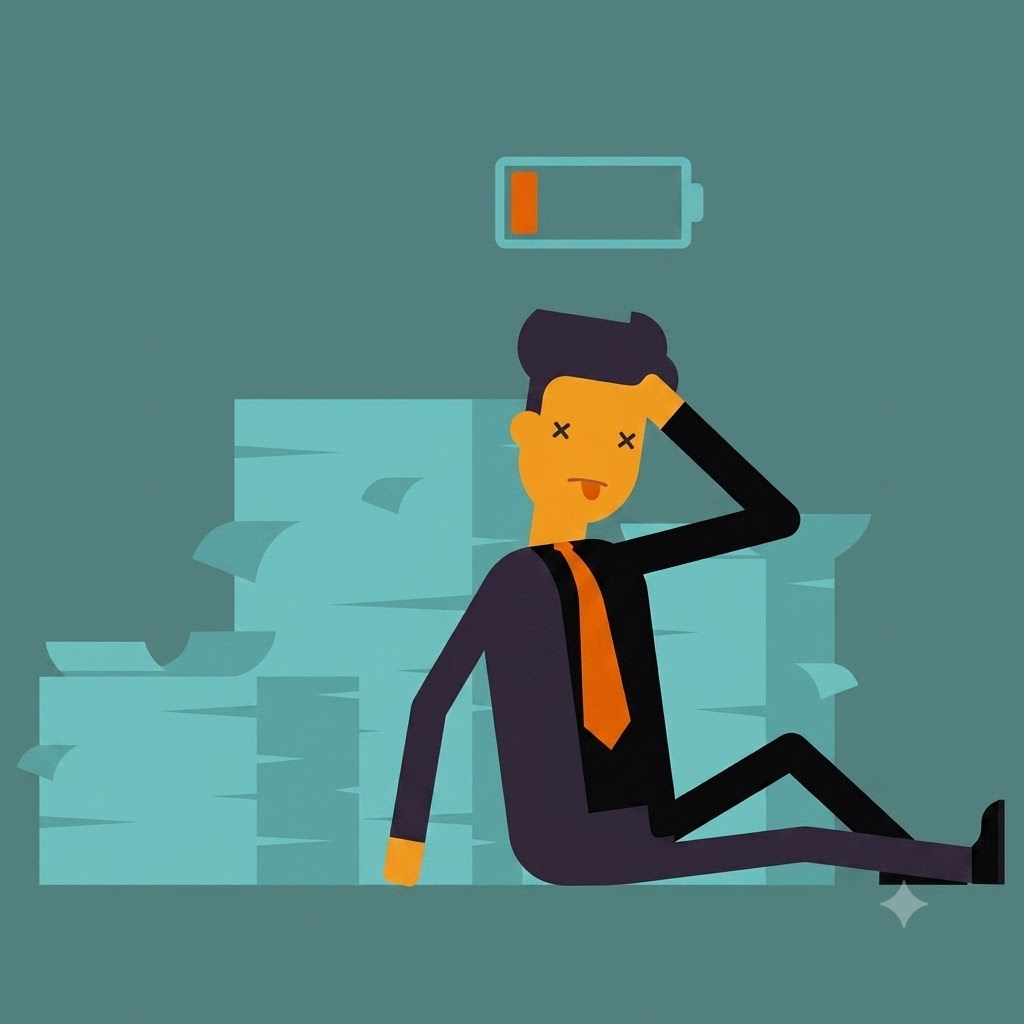
7. Ease off the digital adrenaline rush
Do you need the rush of adrenaline all the time, whether it’s checking your live website analytics, tracking real-time ad performance, or diving into paid employment tasks?
“You really ought to monitor that,” says Allen. “You need to ask yourself how well your life is really going. What happens often is that those hooked on adrenaline hop from one rush to another—from one task to another, from work to gym.”
Chasing viral metrics can create an unhealthy dopamine loop. Monitor your relationship with your business metrics so you don’t burn out your energy reserves.
8. Build interests outside of your brand footprint
“Some people are wedded to work, especially if they’re self-employed,” says Allen. But if your brand’s digital presence is the only thing you focus on, what happens to your identity outside of your job?
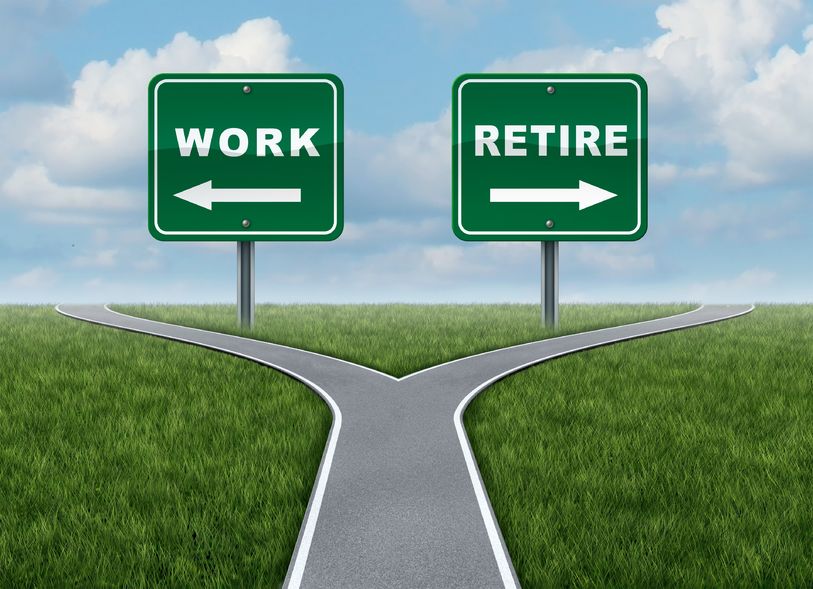
We all need personal interests we can fall back on that aren’t tied to monetizable work or online engagement. The Mental Health Foundation reckons that overworked people should try to reduce stress through exercise, relaxation, or regular offline hobbies.
9. Make clients and followers wait
One way to avoid being incessantly available is to set clear boundaries for your communication. Make it clear to your audience and clients that you reply to inquiries within 24 to 48 hours.
“As long as you’re reliable about replying in the end, it’s surprising how little this bothers people,” argues Oliver Burkeman, author of Help! How to Become Slightly Happier and Get a Bit More Done.
Texting and direct messages are based on different parameters—sending a message often creates an expectation for an immediate reply. But remember to just say no to instant availability. You are not endlessly available for business queries outside of your standard working hours.
10. Set your own rules for business growth
“You really need to find your own work-life balance, probably with the help of others,” says Allen. “The important thing is to ignore the shoulds—the shoulds that come from other people or from you internalising others’ mindsets. You have to rely on your own intuition.”
We are witnessing a major generational shift in our attitudes toward building a business. Modern entrepreneurs are more likely than their elders to use virtual environments to their advantage. They understand that the best digital marketing tips for small business owners are the ones that allow them to set their own work patterns, run automated systems from home, and prioritize personal time over endless corporate grinding.
