1. 𝙎𝙩𝙚𝙥 𝙖𝙬𝙖𝙮 𝙛𝙧𝙤𝙢 𝙩𝙝𝙚 𝙚𝙢𝙖𝙞𝙡
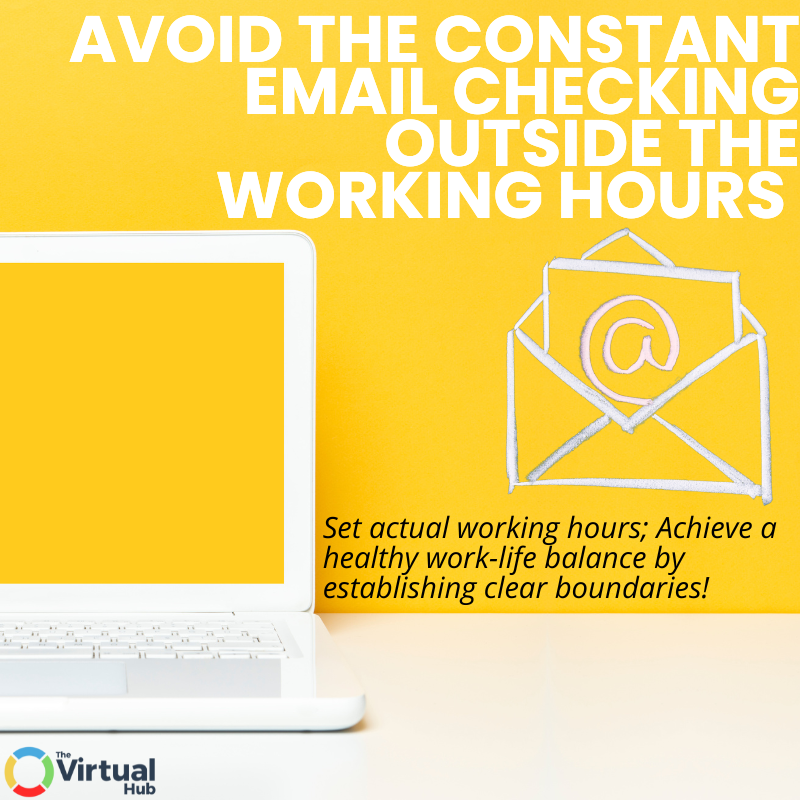
Earlier this year, a report circulated that a French law banned employees from checking work emails after 6pm. It wasn’t true but fitted with our notion of the French as a nation of slackers favouring long lunches, five-day weekends and plenty of slap and tickle while les rosbifs carried on working through the night. But maybe there should be a law against after-hours fielding of bosses’ emails? “It would be impossible to enforce,” says Leeds-based life coach Melanie Allen. “But companies should think about productivity. Is this incessant checking of emails and social media by their employees adding to productivity or just pointless stress?”
2. 𝙅𝙪𝙨𝙩 𝙨𝙖𝙮 𝙣𝙤
If you’re available 24/7 to your boss’s – with all due respect – increasingly loopy and unremitting demands, and you’re the kind of person who as a result gets overloaded, try harnessing the power of no. Allen advises: “If you tend to say yes without thinking when you’re asked to do something extra, stall. Don’t answer straight away. Say you’ll get back to the person asking, then use that time to think clearly about whether to say yes or no. If you want to say yes, fine. But if you want to say no, say no and keep saying it. Don’t justify your actions or give excuses. There’s no need to be nasty or rude.” The Mental Health Foundation recommends that when work demands are too high, you must speak up. Your role model here might well be Eric Cantona: in the Ken Loach film Looking for Eric, he instructs a dithering Englishman on the power of saying no. Or rather “non”.
3. 𝙒𝙤𝙧𝙠 𝙝𝙖𝙧𝙙𝙚𝙧, 𝙣𝙤𝙩 𝙨𝙢𝙖𝙧𝙩𝙚𝙧
There is a body of opinion that you should work more and sleep less. It often takes Margaret Thatcher as a role model: she only needed four hours sleep and look what she did to the country! These days they call it sleep hacking – training your mind and body to need less sleep. But that trend is all wrong, argues US academic Matt Might in his work-life balance blog. Think of it this way, he suggests: “The equation for work is: output = unit of work / hour × hours worked. ‘Work more, sleep less’ people tend to focus too much on the hours worked part of the equation. The unit of work / hour part of the equation – productivity – is just as (if not more) important.” In its advice on work-life balance, the Mental Health Foundation counsels: “Work smart, not long.” What does that mean in practice? “This involves tight prioritisation – allowing yourself a certain amount of time per task – and trying not to get caught up in less productive activities, such as unstructured meetings that tend to take up lots of time.” We’ve all been there, wishing we weren’t stuck in the same room as a bunch of fatuous blowhards – or, as Michael Foley puts it in his superb book The Age of Absurdity, “the colleagues who speak at length in every meeting, in loud confident tones that suggest critical independence, but never deviate from the official line”.
Clearly, though, many of us are not working smart, but – and there’s no easy way to put this – stupid. British productivity remains low while the number of hours we work exceeds that of some of our European neighbours. One result of this is the dismal array of statistics set out by the Mental Health Foundation: when working long hours 27% of employees feel depressed, 34% feel anxious and 58% feel irritable.
4. 𝙇𝙚𝙖𝙫𝙚 𝙬𝙤𝙧𝙠 𝙖𝙩 𝙬𝙤𝙧𝙠
Imagine you’re just about to leave your workplace, possibly for cocktails at TGI Fridays, even though it’s actually Tuesday. Before you do, write a note to yourself listing outstanding tasks or any work things that are on your mind. “Then shut the diary, turn off your PC, store your message and leave it.” counsels Allen. “Focus on the image of shutting the diary, saving the message or turning off your PC.” If this is not possible, she recommends what she calls a stop-breathe technique. What does that mean? “Take a slow breath and acknowledge that you’ve left. If you can’t do that at the office door, when you’re getting a train or bus and the door closes, imagine that’s the end of your working day. Or if you’re in your car, sit at the wheel for a short while before you start the engine.”
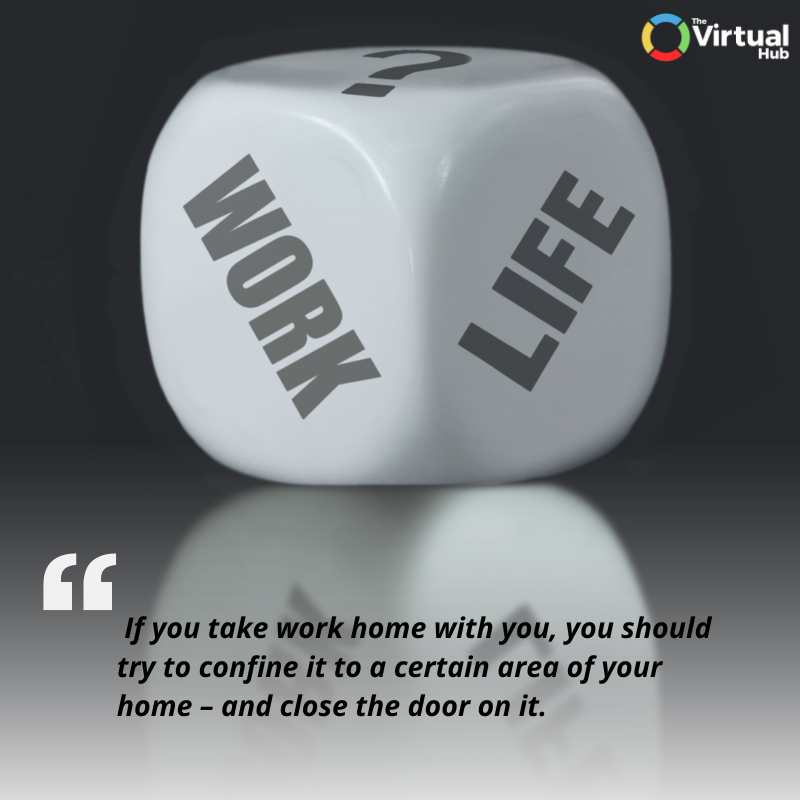
Closure is a big theme among those offering tips to a healthy work-life balance: the Mental Health Foundation says that if you do happen to take work home with you, you should try to confine it to a certain area of your home – and be able to close the door on it.
5. 𝙁𝙤𝙧𝙜𝙚𝙩 𝙖𝙗𝙤𝙪𝙩 𝙥𝙚𝙧𝙛𝙚𝙘𝙩𝙞𝙤𝙣
The injunction to put work away for the day sounds fine, but hold on. It’s surely not as simple as that. As you leave work, you realise you haven’t done something as well as you could. You turn on your heel and go back to do it right. Is that so very wrong? “Well,” says Allen, “some people find it very hard to let things go. I call it ‘good enough versus fabulous’. Sometimes, if you’re overworked, you need to explicitly tell yourself that what you’ve done may not be perfect, but it is good enough.” She cites the example of a woman who goes back to full-time work and finds that her partner doesn’t do the laundry as well as she used to; he just piles mangled T-shirts with their sleeves still inside out on the radiators. “But she has to let that go because the alternative is she takes on more work when she’s already stressed out. What I’m saying is, don’t put extra pressure on yourself when you don’t need to – at work or at home.” As Netmums tells working mothers in its top 10 tips for work-life balance: “Give yourself a break. It doesn’t matter if your home’s not immaculate and your children aren’t fed super-nutritious, cooked-from-scratch food every day.”
6. 𝘿𝙤𝙣’𝙩 𝙗𝙚 𝙖 𝙢𝙖𝙧𝙩𝙮𝙧
“There is also the tendency I come across where somebody will say, ‘I have to do everything round here,’” says Allen. “To feel like a martyr gives some people a great deal of pleasure – they feel they’re powerful and busy.” And what’s wrong with that? “It’s worth thinking about how infuriating that is for other people. The reason most people are martyrs is that they want the approval of others; if they realise martyrdom – just doing all the work – is exasperating to be around, they might stop behaving that way.”
7. 𝙀𝙖𝙨𝙚 𝙤𝙛𝙛 𝙩𝙝𝙚 𝙖𝙙𝙧𝙚𝙣𝙖𝙡𝙞𝙣𝙚
Do you need the rush of adrenaline all the time, whether it’s at the gym, in the sack or at the coalface of paid employment? “You really ought to monitor that,” says Allen. “You need to ask yourself how well your life is really going. What happens often is that those hooked on adrenaline hop from one rush to another – from one task to another, from work to gym. What’s that like for your family and friends to be around? Not much fun, especially when you crash – which inevitably you will.”
8. 𝙏𝙝𝙞𝙣𝙠 𝙖𝙗𝙤𝙪𝙩 𝙧𝙚𝙩𝙞𝙧𝙚𝙢𝙚𝙣𝙩
“Some people are wedded to work, especially if they’re self-employed,” says Allen. “But I get them to ask themselves: if work is the only thing you do, then what happens if you lose your job or if your business fails? I don’t underestimate the difficulties of putting work back in its box at a time of austerity, but I try to encourage my clients to think of it this way: for most people there will be gaps in employment. What do you do then? And what about when you retire? Sure, you may well carry on working in a part-time capacity, which I think is a good thing, but you will need other interests in life when work becomes less important.”
Is she talking about hobbies? Stamp collecting, perhaps? “No, that does sound old-fashioned. But we all need interests we can fall back on. We all need something we can fall back on that isn’t work.” The Mental Health Foundation reckons that overworked people should try to reduce stress through exercise, relaxation or hobbies. Throwing darts at a picture of your boss is a satisfying way of cultivating all three de-stressors at once.

9. 𝙈𝙖𝙠𝙚 ’𝙚𝙢 𝙬𝙖𝙞𝙩
One way to avoid being incessantly available is to make it clear to your colleagues that you will reply to emails within 24 or 48 hours. “As long as you’re reliable about replying in the end, it’s surprising how little this bothers people,” argues Oliver Burkeman, author of Help! How to Become Slightly Happier and Get a Bit More Done. Quite so, but texting is based on different parameters – to send a text is to expect a quick, even immediate reply. But fear not, remember point two – just say no. You need to make it clear that you’re not endlessly available for work queries outside working hours. Admittedly, that’s easier said than done.
10. 𝙎𝙚𝙩 𝙮𝙤𝙪𝙧 𝙤𝙬𝙣 𝙧𝙪𝙡𝙚𝙨
“You really need to find your own work-life balance, probably with the help of others,” says Allen. “The important thing is to ignore the shoulds – the shoulds that comes from other people or from you internalising others’ mindsets. You have to rely on your own intuition.”
We are witnessing a generational shift in our attitudes to work. Millennials (those born after 1980) are more likely than their elders to blur the lines between work and home. Some 81% of them think they should set their own work patterns. For some, that might involve virtual meetings (by Skype, for example) rather than real ones, the opportunity to work from home when they want to and, ideally, a no-recrimination clause in their contract that would be activated when they tell their boss to shove it when she asks them to work next Sunday.
Well, we can all dream. What’s workable is, of course, another matter.