Manage Work-Life Balance: 10 Tips for Startup Founders
Learning how to manage work-life balance is one of the most critical factors for long-term entrepreneurial success. Launching a new venture demands intense energy, but letting your business consume your personal time is a fast track to burnout. If you are trying to figure out how to manage work-life balance as a startup founder, you aren’t alone. Balancing unremitting demands while keeping your productivity high requires an intentional shift in mindset. Here are ten practical strategies to help you reclaim your time and run your business smarter, not harder.
We think, mistakenly, that success is the result of the amount of time we put in at work, instead of the quality of time we put in… We are so much more conscious about how charged our phones are versus how charged we are.
— Arianna Huffington, Founder of The Huffington Post and CEO of Thrive Global
1. Step away from the email
Earlier this year, a report circulated that a French law banned employees from checking work emails after 6:00 PM. While it wasn’t entirely true, it fit perfectly with our cultural notions of a healthier European work-life balance.

But maybe there should be a law against after-hours fielding of unremitting digital demands? This concept draws heavily from the official French Right to Disconnect legislation, which requires companies to set clear boundaries for digital communication. Incessant checking of emails and social media outside of standard office hours rarely adds to actual productivity—instead, it simply breeds pointless, lingering stress. Set strict boundaries on your inbox availability.
2. Just say no
If you find yourself available 24/7 to increasingly demanding requests, you are bound to get overloaded. To effectively manage work-life balance, you must harness the power of saying “no.”

If you tend to say “yes” automatically without thinking when asked to do something extra, learn to stall. Don’t answer straight away. Say you will get back to the person, then use that breathing room to think clearly about your current capacity. If you want to say no, say no firmly without justifying your actions or piling up excuses. You don’t need to be rude—just resolute.
3. Work smarter, not harder
There is a loud body of opinion online pushing the narrative that you should work more and sleep less—often referred to as “sleep hacking.” However, this trend misses the core fundamental of efficiency.
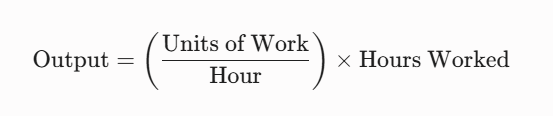
Your actual productivity per hour is what truly moves the needle, not just the raw total of hours logged. According to research on productivity from the Harvard Business Review, overworking leads to a progressive decline in output quality and cognitive function. Work smart by strictly prioritizing your daily tasks, limiting unstructured meetings, and refusing to get bogged down by low-impact activities.
4. Leave work at work
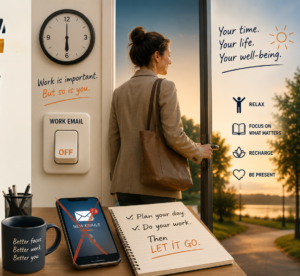
Before you leave your workspace for the day, write a definitive note to yourself listing your outstanding tasks and any lingering work thoughts. Then, close your planner, shut down your computer, and intentionally leave it behind.

If you find it hard to disconnect mentally, try a “stop-breathe” transition technique:
- Take a slow, deep breath at the office door, on your commute, or in your car before starting the engine.
- Acknowledge that your working day has officially ended.
- If you work from home, confine your operations to a specific room so you can physically close the door on it at the end of the day.
5. Forget about perfection

Some professionals find it incredibly difficult to let things go, but when you are chronically overworked, you must learn to choose “good enough” over flawless execution.
Do not put extra, unnecessary pressure on yourself to achieve absolute perfection in every minor detail at work or at home. Give yourself a break; a hyper-focus on immaculate results will only compound your stress when your energy is already stretched thin.
6. Don’t be a martyr
It is easy to fall into the psychological trap of thinking, “I have to do absolutely everything around here.” While acting like a corporate martyr can temporarily make you feel powerful, indispensable, and busy, it is often incredibly frustrating and exhausting for the teams around you.

True leadership lies in delegation. Drop the martyrdom complex, trust your team with critical tasks, and understand that constant overworking rarely wins the sustainable approval you are looking for.
7. Ease off the adrenaline
Many startup founders become hooked on the constant rush of adrenaline, hopping frantically from one high-stakes task to another, or from a high-intensity workout straight back to a midnight strategy session.
You must actively monitor this behavioral loop. Constantly running on adrenaline is unsustainable for your body and highly stressful for your family and friends to be around—especially when you inevitably hit a wall and crash. Prioritize deliberate downtime to allow your nervous system to recover.

8. Think about retirement
When you are self-employed or building a company, it is easy to become completely wedded to your work. However, you must ask yourself: if your business defines your entire identity, what happens if it hits a roadblock, or when you eventually step away?

Even during times of economic austerity, you must cultivate interests, hobbies, and networks completely outside of your corporate identity. Leading mental health resources from the Mayo Clinic emphasize that reducing stress through exercise, dedicated relaxation, or engaging personal hobbies builds a fulfilling lifestyle that gives you purpose when work eventually becomes less central.
9. Make ’em wait
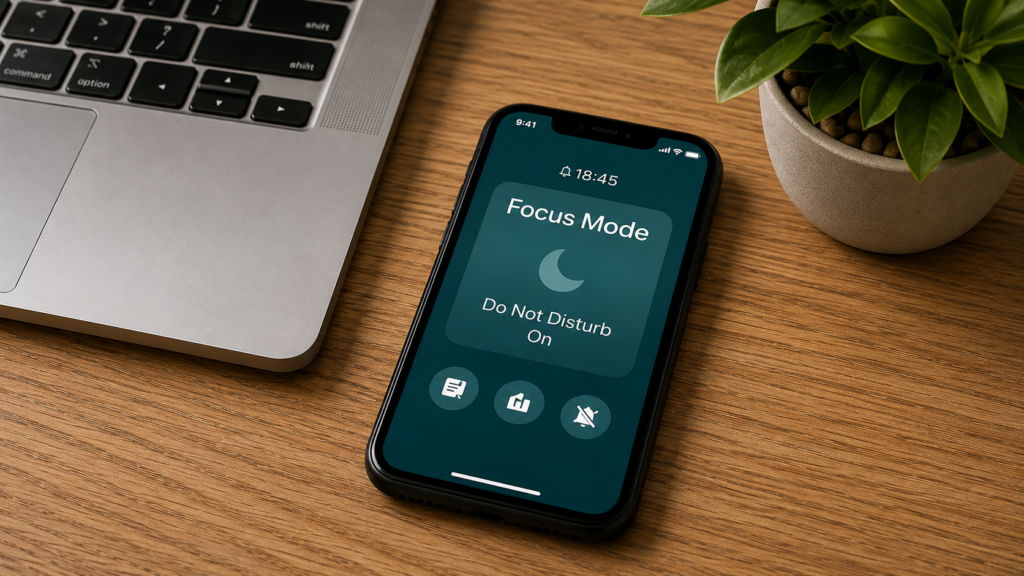
One of the most immediate ways to reclaim your time is to establish clear boundaries regarding communication response times. Let your colleagues, clients, and partners know that non-urgent emails will be replied to within 24 to 48 hours.
As long as you remain consistent and reliable in your communication over the long run, people adapt quickly. Text messages and instant pings may trick us into expecting immediate replies, but you have the power to set your own timeline and protect your personal hours.
10. Set your own rules
Ultimately, you need to discover a personalized system to manage work-life balance in a way that fits your unique lifestyle, ignoring the arbitrary “shoulds” internalized from outside critics. Trust your intuition and construct a system where your venture fuels your life rather than draining it.
We are living through a massive generational shift where founders and teams are blurring traditional boundaries to design custom work patterns. This includes:
- Utilizing strategic asynchronous communication tools.
- Working from home or setting flexible operational windows.
- Prioritizing personal health milestones alongside business revenue targets.
Subscribe. Get practical tips and insights straight to your inbox.
Share this post: